.jpg)
.svg)
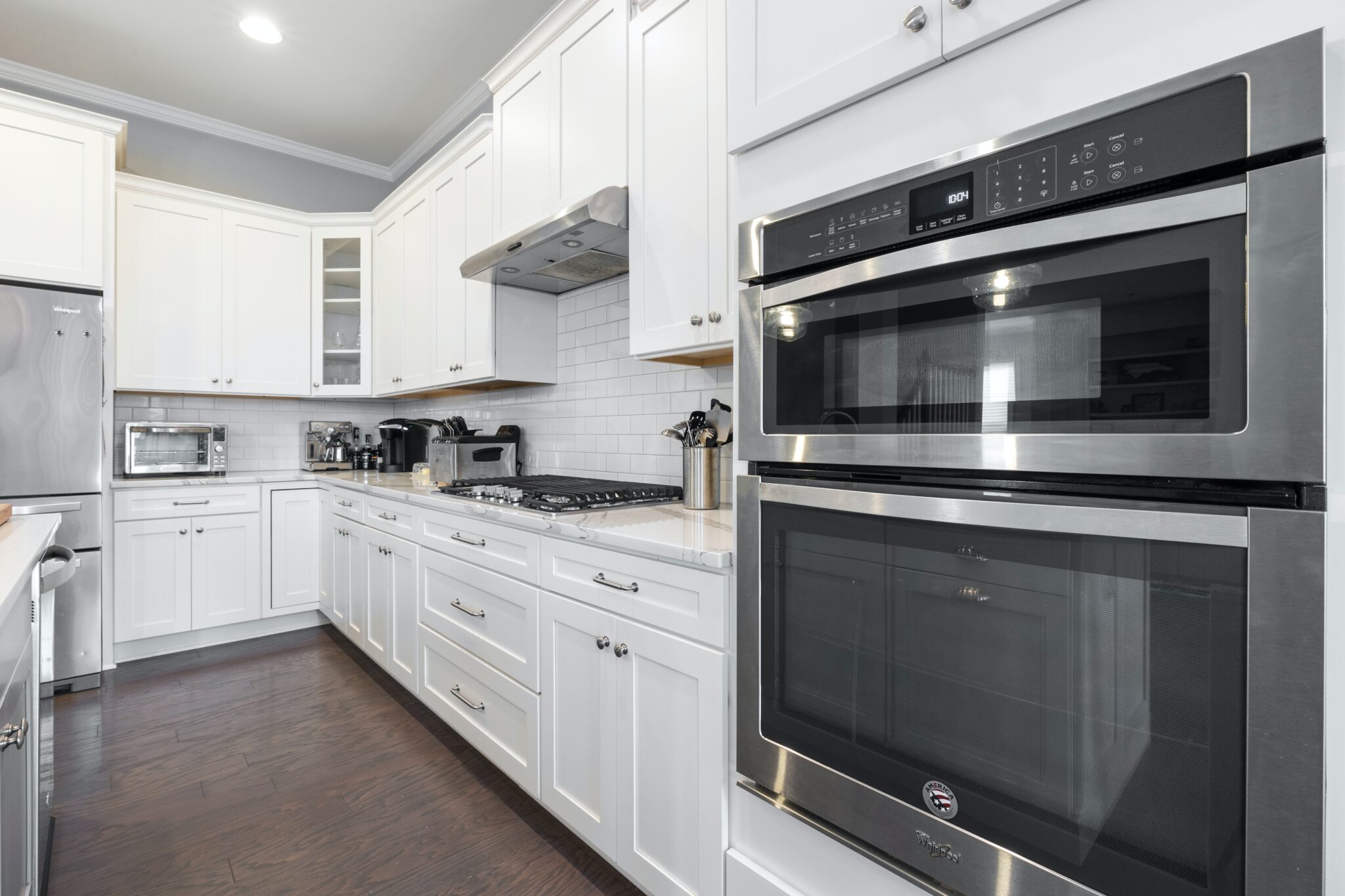

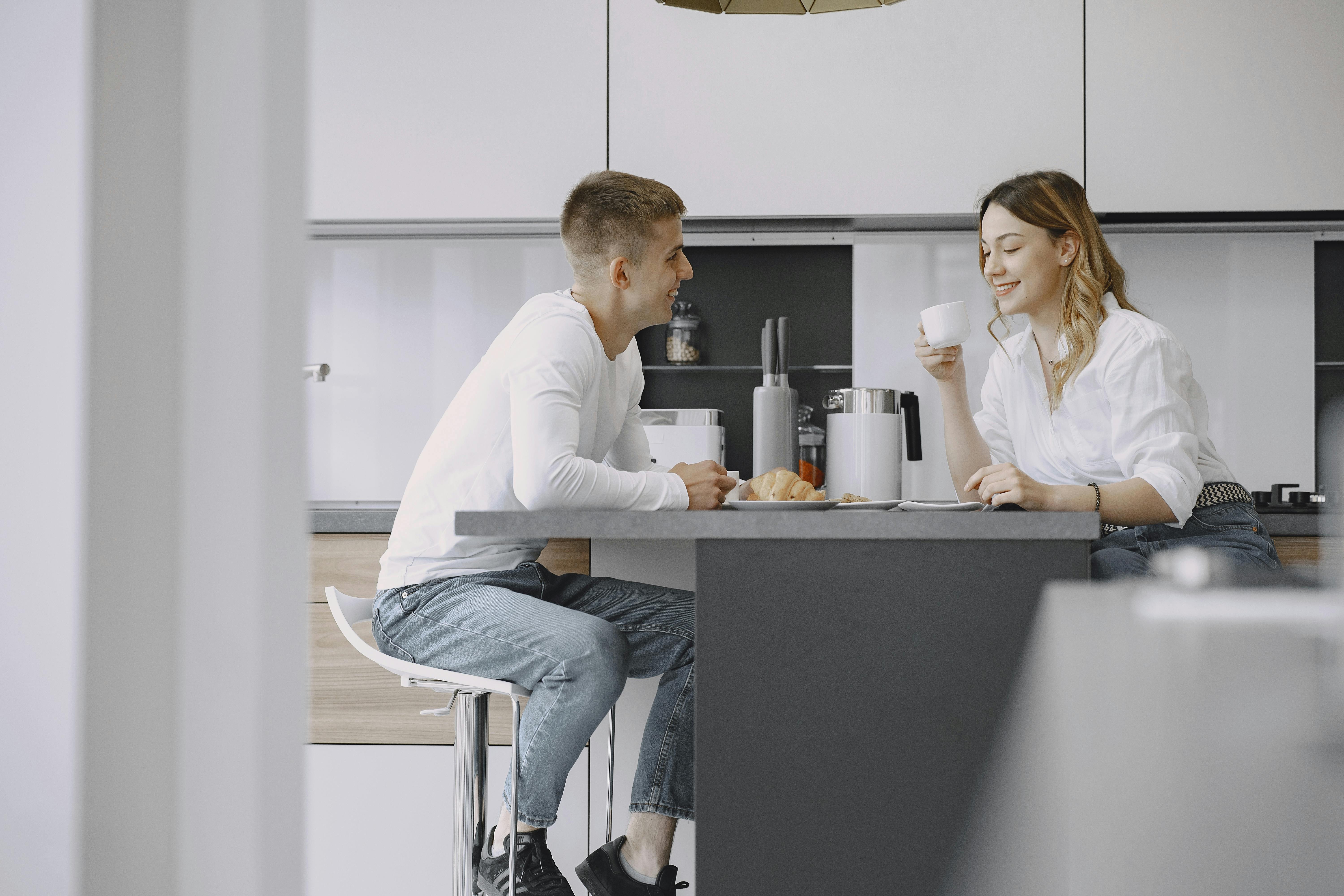
All couples have a kitchen story. Maybe one of you wakes up before the sun does, carefully going about the hob and kettle; maybe the other is a night owl who prefers to cook after work, when the house finally feels less fraught. If a kitchen is not designed for those different rhythms, it will make itself known in small but irksome ways: someone standing at the fridge blocking access when you come out to lunch with your groceries; both of you going for what’s in the same drawer at the same time; one party always feeling “in the way.”
A good kitchen layout does more than look neat in photos. It behaves like a shared workspace that understands both of you. A truly considered modular kitchen design for couples with different routines makes it easier to move, cook, clean, and put things back without constant negotiation. Instead of adjusting yourselves to a standard layout, the kitchen adjusts to you. That is the mindset you want to carry into planning.
Before you think about cabinet finishes or colours, take a week to simply observe what already happens. Who starts the day in the kitchen? Where do you put bags, keys, or lunchboxes when you walk in? Does one of you always stand near the sink while the other naturally moves toward the stove or oven?
You do not need a spreadsheet; a few notes on your phone are enough. Watch the “problem spots”: the place where you constantly bump shoulders, the drawer nobody opens because it is too low, or the stretch of counter that becomes a dumping ground. These are not flaws in how you live. They are clues about what your next kitchen needs to handle better. When you later talk to a designer, this simple awareness will be more helpful than any collection of random inspiration pictures.
Once you know how you both move, the next step is turning those patterns into a layout. The goal is not to create “his” and “her” zones, but to make sure each person has a way to work without feeling like they are constantly in someone else’s path.
When you meet modular kitchen manufacturers in Dwarka, try taking a simple hand-drawn sketch with you. Mark where the fridge, sink, and hob currently are, then add arrows showing how you usually move between them. Share real examples: “When I am packing lunchboxes, I’m always standing where the fridge door needs to open,” or “When one of us is washing dishes, the other cannot reach the stove comfortably.” A good design team can translate those small frustrations into specific changes, shifting a tall unit, widening a passage, or splitting prep space, so both routines feel supported.
It can help to write down:
• The busiest time of day in your kitchen
• The 3–5 tasks each of you does most often
• Any health or comfort issues (back pain, height, reach) that influence how you work
Zoning sounds like a technical word, but in practice it simply means this: everything that belongs together, works together. For couples, zoning is what stops two people from constantly crossing paths. Cooking, prep, cleaning, and quick snacks should feel like related but independent activities, not a queue.
You might keep the main cooking triangle (hob, fridge, sink) compact for the person who cooks more often, and create a smaller side zone for tea, coffee, or quick reheats. One of you can make a late-night snack without walking through hot pots and pans. If space allows, a second, smaller prep surface away from the stove gives the other partner somewhere to chop, assemble, or plate food without asking, “Can I just stand here for a minute?”
Some zoning ideas that work well in real homes:
• Keep the intense cooking area small and efficient for the main cook
• Add at least one “neutral” counter patch either of you can use
• Keep cleaning tools, soaps, and dustbins close to the sink, not scattered
• Place tea, coffee, or snack storage slightly outside the core cooking path
Storage is where silent frustration often builds up. One person’s baking tins sit behind everyday groceries, or special ingredients end up lost behind large pots. Over time, it starts to feel like the kitchen naturally “belongs” more to one person than the other. The aim with custom kitchen ideas for busy couples is to make storage feel shared but clear.
When you talk to custom kitchen manufacturers in Dwarka expressway, ask them to walk you through a storage plan, not just cabinet sizes. Which shelves will hold daily groceries? Where will lunchboxes live? Is there a fixed spot for baking tools, snacks, or supplements? In many newer apartments, tall units and lofts help use vertical space intelligently. Everyday items stay between shoulder and waist height, so both of you can reach them comfortably, while rarely used dishes and extra stock move higher. When everyone knows where things belong, the kitchen feels calmer and arguments about “where did you keep this?” naturally reduce.
Two different routines often mean the kitchen is “on” for more hours of the day. One person may cook before sunrise, another might be cleaning up near midnight. Under that kind of use, delicate finishes and weak hardware show their limits quickly. You want things that can be wiped, opened, and closed repeatedly without becoming noisy, unstable, or stained.
Experienced wooden modular kitchen manufacturers in Dwarka expressway usually guide you toward a mix of solid carcass materials, moisture-aware planning around sinks, and reliable hardware brands. Matt or softly textured finishes hide fingerprints better when someone is moving fast between calls. Soft-close drawers and hinges are not just a nice extra; they are a quiet kindness when one partner is sleeping or working nearby. Good task lighting under wall cabinets and decent ventilation also matter more than most people realise. They make the kitchen usable and comfortable at odd hours, not just when the sun is perfect.
A quick mental checklist:
• Will this surface still look decent after daily wiping and occasional spills?
• Do the drawers glide smoothly when full, or only when empty in a showroom?
• Is the hardware from brands your installer is willing to support in future?
You can absolutely design a kitchen alone with enough time and patience, but working with people who see hundreds of similar spaces every year can save you from avoidable mistakes. Local specialists know the common quirks of apartments in your area: where builders usually leave columns, how utility shafts are placed, and how much space you truly have once doors and windows are considered.
When you share your story with a good design team, they will not just nod politely. If you tell them, “One of us cooks late most nights while the other works at the dining table,” they should respond with lighting, layout, and hardware suggestions that reduce noise, glare, and clutter. For couples around the expressway belt, teams linked to custom kitchen manufacturers in Dwarka expressway can often spot constraints just by looking at your floor plan because they have seen similar ones before. That familiarity shortens the trial-and-error phase and gets you to a workable design faster.
A modular kitchen built for two people with different routines does not shout for attention, but you feel the difference every day. You do not bump into each other as often. You can find things when you need them. The person who cooks less still knows where basics are kept and feels comfortable stepping in. In a small apartment, that calm, predictable flow changes the way the whole home feels. The kitchen stops being a place where you “manage around” each other and becomes a space that quietly supports how you both live.
At BluePearl Interio, we treat every kitchen as a shared project, not just a set of cabinets and appliances. We design and manufacture under one roof, which lets us fine-tune layouts, finishes, and details until they match the way you and your partner actually move through your day. Whether you are planning a fresh build or correcting an old layout that never really worked, we listen to both sides of the story and then build a kitchen that respects them equally. When you are ready to plan a space that fits two different rhythms without constant compromise, we are here to help you shape it!
1. How can couples minimize conflicts in a tiny modularkitchen?
Begin by being honest about where you currently obstruct each other. Then plan the layout so that those pressure points are separated, move the fridge so it doesn’t open into the main prep space, or insert a small side counter where one person can make tea or snacks while the other cooks, for instance. A slightly wider main corridor and a flexible work surface is all it takes to preserve the fun.
2. Why do both partners need their “own”storage?
You don’t need two totally separate kitchens, but it’s nice when a few shelves or drawers are obviously reserved for different purposes. Daily use items need to live in common, easily accessible areas. Specialty items, such as baking tools, barware or health supplements, could be stored together so that the person with whom they are most associated has no doubt where to look. Clear structure helps maintain the fair feeling of having enough space to store both people’s belongings and minimizes the feeling that one person is always rearranging the other’s things.
3. What should couples know before going to a modular kitchen manufacturer?
Bring raw information, not finished drawings. Rough room measurements and pictures of your existing kitchen, a list of the appliances you own and those you plan to buy, and a brief note from each of you about what works well (and not so) now will suffice. When a designer knows your habits, trigger points and wish list, they can respond with solutions that work for both parties rather than corral you into a standard layout.